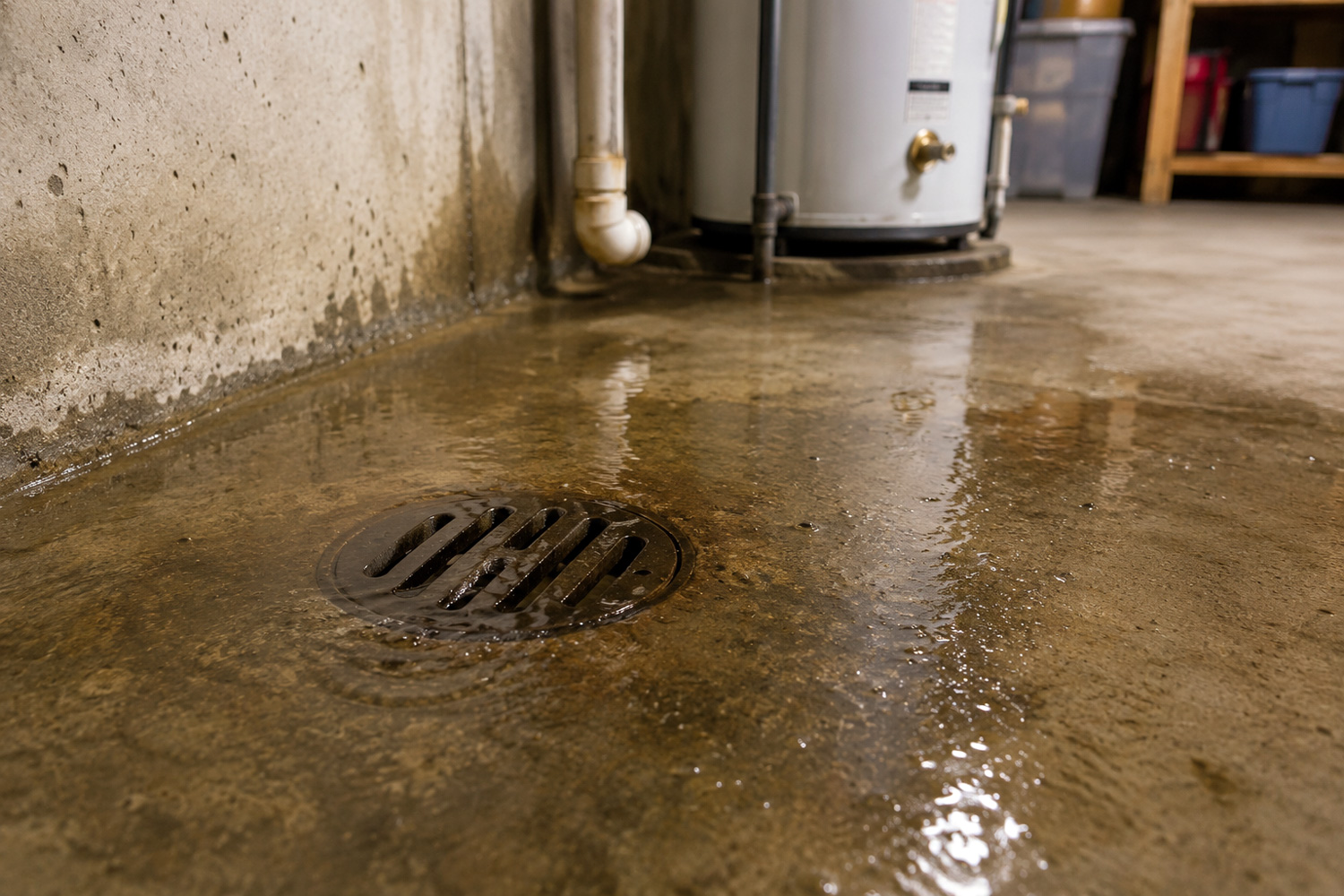
Basement floor drain backups can appear out of nowhere. One day the drain is dry, and the next you’re dealing with standing water, foul odors, or even sewage.
The good news is that once you understand what causes a basement floor drain backup, you can prevent many of them and stop the rest before they become expensive disasters.
What a Basement Floor Drain Does
A basement floor drain is designed to:
-
Collect water from the basement floor.
-
Channel water from appliances like water heaters or HVAC systems.
-
Provide an emergency path for water during leaks or flooding.
Most drains connect to either the home’s main sewer line or a stormwater system, depending on local plumbing codes in Minnesota.
Common Causes of Basement Drain Backups
Main Sewer Line Blockages
The most common cause of a basement floor drain backup is a clog in the main sewer line. When the line is blocked, wastewater has nowhere to go, so it comes back up through the lowest opening, usually the basement drain.
Typical causes include:
-
Tree roots invading old pipes.
-
Grease buildup.
-
Flushed wipes or hygiene products.
-
Collapsed or cracked sewer lines.
Common warning signs are slow drains throughout the house, gurgling toilets, and sewage odors. If you notice those signs, call a Twin Cities plumber before the problem gets worse.
Heavy Rain or Snowmelt Overloading the System
In St. Paul and the Twin Cities, rapid snowmelt or intense summer storms can overwhelm municipal systems. When the city sewer backs up, your basement drain may be the first place you see it.
This is especially common during periods of heavy runoff, when the system is under pressure and water has nowhere to go.
Clogged Floor Drain Trap
The trap under the drain can fill with debris, lint, sediment, and pet hair. When it clogs, water can’t flow properly through the drain.
Symptoms include:
-
Water pooling around the drain.
-
Slow drainage.
-
Musty odors.
A clogged trap is often a simpler issue than a main line blockage, but it still needs attention before it leads to a bigger basement floor drain backup.
Failed Backwater Valve
Some homes have a backwater valve designed to stop sewage from flowing backward. If it becomes stuck or breaks, backups become much more likely.
A failed valve can leave your home vulnerable during city sewer overloads, so it’s worth having a St. Paul plumber inspect it if backups keep happening.
How to Fix a Basement Drain Backup
Stop Using Water in the House
If the main line is blocked, every flush, shower, or laundry cycle makes the backup worse. Stop running water right away to reduce pressure on the system.
Inspect the Drain Area
Look for:
-
Standing water.
-
Sewage debris.
-
Odors.
-
Visible blockages.
A quick check can help you tell whether you’re dealing with a simple drain issue or a larger sewer problem.
Try Clearing the Trap
Remove the drain cover and use a wet/dry vacuum to clear debris from the trap. If water suddenly drains, the trap was likely the issue.
This can help with minor basement floor drain backup problems, but it won’t solve a deeper sewer line blockage.
Snake the Line
A drain snake can clear small clogs. For deeper blockages, a professional plumber may use a power auger or hydro-jetting.
If the backup keeps returning, the problem may be farther down the line than a basic snake can reach.
Call a Professional for Sewer Line Issues
If multiple fixtures are backing up, the problem is almost certainly in the main line. A professional plumber can:
-
Camera-inspect the sewer.
-
Locate root intrusion.
-
Identify collapsed pipes.
-
Recommend repair or replacement.
For stubborn basement drain backups, this is often the fastest way to find the real cause and prevent repeat problems.
Preventing Future Backups
Install a Backwater Valve
This is one of the most effective ways to stop sewage from flowing into your basement during city sewer overloads. It adds an important layer of protection for homes in St. Paul and the surrounding area.
Schedule Annual Sewer Line Cleaning
St. Paul Pipeworks recommends at least an annual inspection, especially for older Minnesota homes with clay or cast-iron pipes. Regular maintenance can help you catch problems before they turn into a basement floor drain backup.
Keep the Floor Drain Trap Filled
Pour a cup of water into the drain monthly to prevent odors and keep the trap functioning. This small step helps protect the drain and keeps sewer gas from entering the home.
Avoid Flushing Problem Items
Even “flushable” wipes and other bathroom products aren’t truly flushable. They can contribute to clogs and slow buildup in the sewer line.
Address Tree Root Issues Early
Root intrusion is extremely common in older neighborhoods in the St. Paul and Minneapolis metro areas. If roots are already in the line, the problem usually gets worse over time.
When to Call a Professional Immediately
Call a plumber right away if:
-
Sewage is present.
-
Multiple drains are backing up.
-
Water keeps rising even after you stop using fixtures.
-
You smell strong sewer gas.
-
You suspect a broken or collapsed sewer line.
If you need an emergency plumber in St. Paul, don’t wait for the issue to spread. Fast action can help limit damage and protect your home.
FAQs
Why does my basement floor drain keep backing up?
The most common reason is a blockage in the main sewer line, but heavy rain, snowmelt, a clogged trap, or a failed backwater valve can also cause backups. If the problem keeps returning, a professional inspection is the best next step.
Is a basement floor drain backup an emergency?
It can be, especially if sewage is present or multiple drains are backing up. In that case, stop using water and call a plumber right away.
Can I fix a basement drain backup myself?
You may be able to clear a clogged trap or a minor blockage, but deeper sewer line problems usually need professional equipment. If the backup affects more than one fixture, it’s likely beyond a simple DIY fix.
How do I prevent basement drain backups in the Twin Cities?
Regular sewer line cleaning, keeping the trap filled, avoiding flushable wipes, and installing a backwater valve can all help. Homes with older pipes should also have routine inspections from a St. Paul plumber.
Protect Your Basement
A basement floor drain backup is messy, stressful, and often unexpected, but it is also preventable. With regular maintenance, basic upgrades like backwater valves, and quick action when problems appear, you can keep your basement dry and your home protected.
If you’re dealing with a backup now or want to prevent the next one, contact St Paul Pipeworks for trusted plumbing services in St. Paul and the Twin Cities. A local plumber can inspect the problem, explain your options, and help protect your home before damage spreads.