Why Your Water Heater Isn’t Producing Hot Water
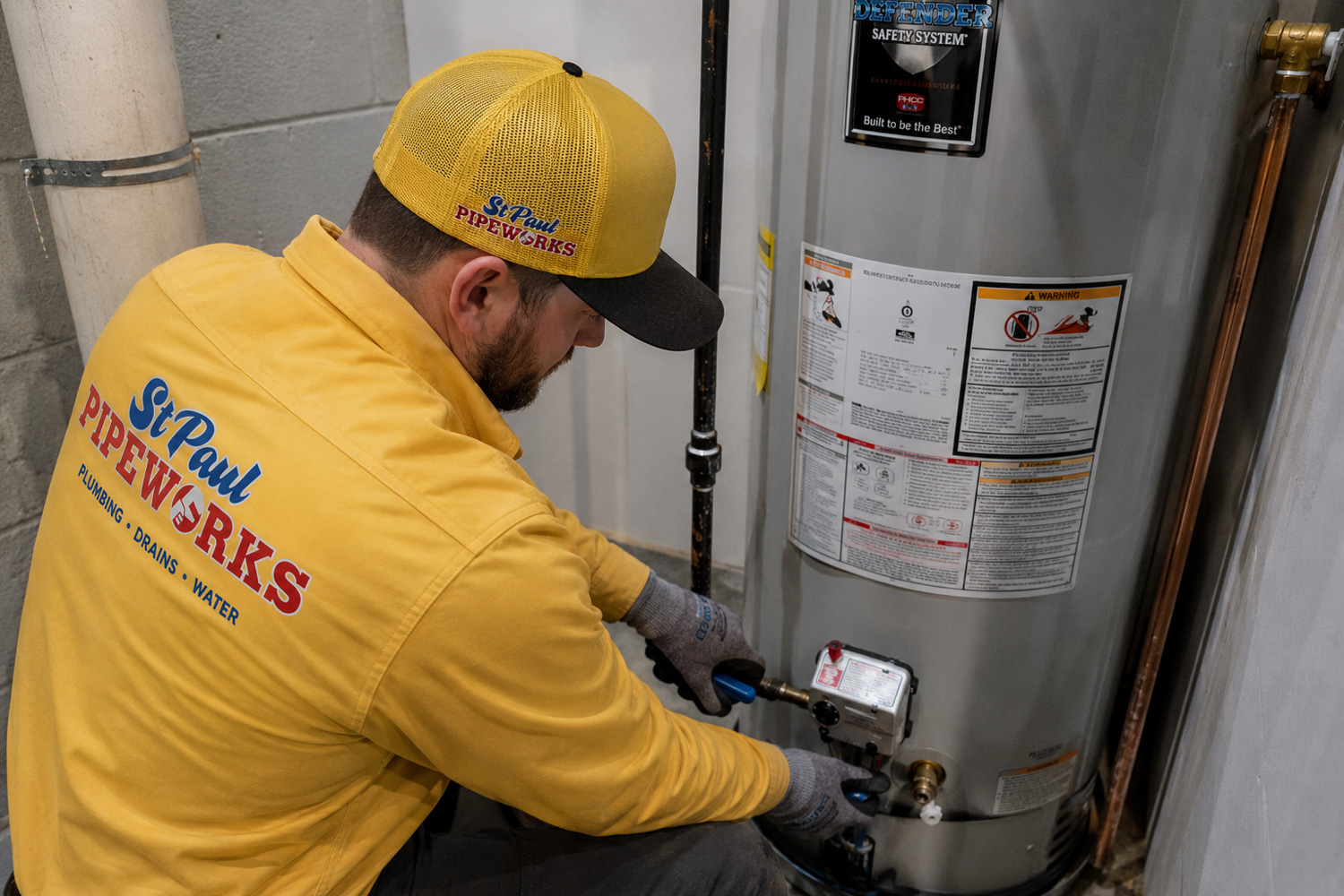
Most water heaters stop producing hot water because the unit isn’t getting power or gas, the breaker is tripped, an electric heating element has failed, or the gas to the pilot light is shut off. Other common causes are sediment buildup, a bad thermostat, or a tripped safety switch. Here are the common steps you can take at home to determine the problem. If all else fails, St Paul Pipeworks plumbers recommend calling a professional plumber.
Common Signs a Heating Element in Your Water Heater May Be Bad
- Water temperature changes: The hot water goes in and out
- Only lukewarm water: The water never gets fully hot
- No hot water: This often means one or both heating elements are not working
- Heats very slowly: The hot water takes much longer to heat up than normal
Immediate Steps for Troubleshooting
- Turn off the power for electric water heaters or turn the gas control to OFF for gas water heaters
- If the water heater is leaking a lot, shut off the water supply valve to the water heater
- If the water heater tank is still leaking and you can’t quickly stop the leak, call a professional plumber
- Flush the tank
If you have an electric water heater, start by making sure it has power
- Check the breaker: In your electric panel, find the breaker for the water heater, and if it has been tripped, switch it fully off, then switch it back on If that does not work:
- Turn off the power: Turn off the water heater breaker first and confirm that the power is off before touching any wires
- Check the wiring at the heater: With the power OFF, remove the access panel to see the wiring and the terminals
- Test the Voltage: Using a multimeter tool, follow the meter instructions and test for the correct voltage at the water heater (If you are not comfortable working around electricity, call a professional plumber or electrician)
- Check the thermostat and heating elements: If the water heater has power but still will not heat, the thermostat or a heating element may be bad
- Put the covers back and restore power: Reinstall the covers and insulation, then turn the breaker back on
If you have a gas water heater, a pilot light issue can stop hot water from being available
- Safety first: If you smell gas or hear a hissing noise, turn the gas control to OFF and wait a few minutes before relighting (If you feel unsure, leave the area and call your gas company)
- Check the pilot flame: Look through the access panel near the bottom of the water heater, and if there is no small flame, the pilot light is out, and you will need to relight it
- Make sure the gas is on: Confirm that the gas shutoff valve is turned open (If you use propane, make sure that the tank isn’t empty)
- Check the thermocouple: If the pilot light will not stay lit, the thermocouple may be dirty, loose, or bad, and will need to be either cleaned or replaced
- Clean the pilot area: Dust can block the pilot, and you can gently clean around the pilot assembly (If you are not comfortable, call a professional plumber or electrician)
- Relight the pilot: Follow the label on the water heater
- Turn the gas knob to PILOT
- Press and hold the knob, then use the igniter or a long lighter to light the pilot
- Keep holding the knob for 30 to 60 seconds
- Release the knob and confirm that the pilot stays lit
- Check the temperature setting: Set the water heater temperature to around 120﮿ F
- Call a professional: If the pilot keeps going out or you smell gas, STOP and call a professional plumber or electrician
Check for Leaks
Leaks can come from loose fittings or valves, a failing pressure relief valve, or an old, rusty tank. A leaking tank usually means the water heater needs to be replaced.
- Dry the area and see where the water starts leaking from
- Check the top pipes and valves for dripping
- Check the drain valve and the pressure relief valve for leaks
- If water is coming from the bottom of the tank, the water heater is probably failing
Flush the Tank to Remove Sediment
- Turn off the power or gas
- Shut off the cold water to the tank
- Connect a hose to the drain valve
- Drain the water heater until it is clear
- Close the valve and refill the tank before turning the power back on
Reset Button
The reset button is a safety switch located behind an access panel on the side of the tank near the thermostat or in the digital menu on newer model water heaters. It shuts off the heater if the water heater gets too hot or the heating element fails. Pressing it can turn the water heater back on.
- Turn off the power at the breaker for electric water heaters or follow the unit’s shutdown steps for gas water heaters
- Remove the access panel if needed
- Press the reset button until it clicks
- Put covers back on, restore power, and test the hot water after a few minutes
If you are still having trouble getting hot water in your home, are interested in replacing a water heater, or are just looking for a quality plumber in the St. Paul and Minneapolis metro area, give St Paul Pipeworks a call today.
FAQs
Why is my water heater not producing hot water?
A water heater may stop producing hot water because of a tripped breaker, failed heating element, pilot light problem, bad thermostat, sediment buildup, or a safety shutoff.
How do I know if my water heater heating element is bad?
Common signs include lukewarm water, inconsistent temperature, very slow heating, or no hot water at all. In electric models, these symptoms often point to a failing element or thermostat.
What should I check first if I have no hot water?
Start by checking the power supply for an electric water heater or the pilot light and gas supply for a gas water heater. If the unit is leaking, shut off the water supply first.
Can sediment cause my water heater to stop working properly?
Yes. Sediment buildup can reduce heating efficiency, cause rumbling noises, and make the water heater work harder. Over time, it can lead to poor performance and premature failure.
When should I replace my water heater instead of repairing it?
If the tank is leaking from the bottom, the unit is very old, or the same problems keep returning, replacement is often the most cost-effective choice.
Yours Truly,
Matthew Dettwiler
Social Media Manager