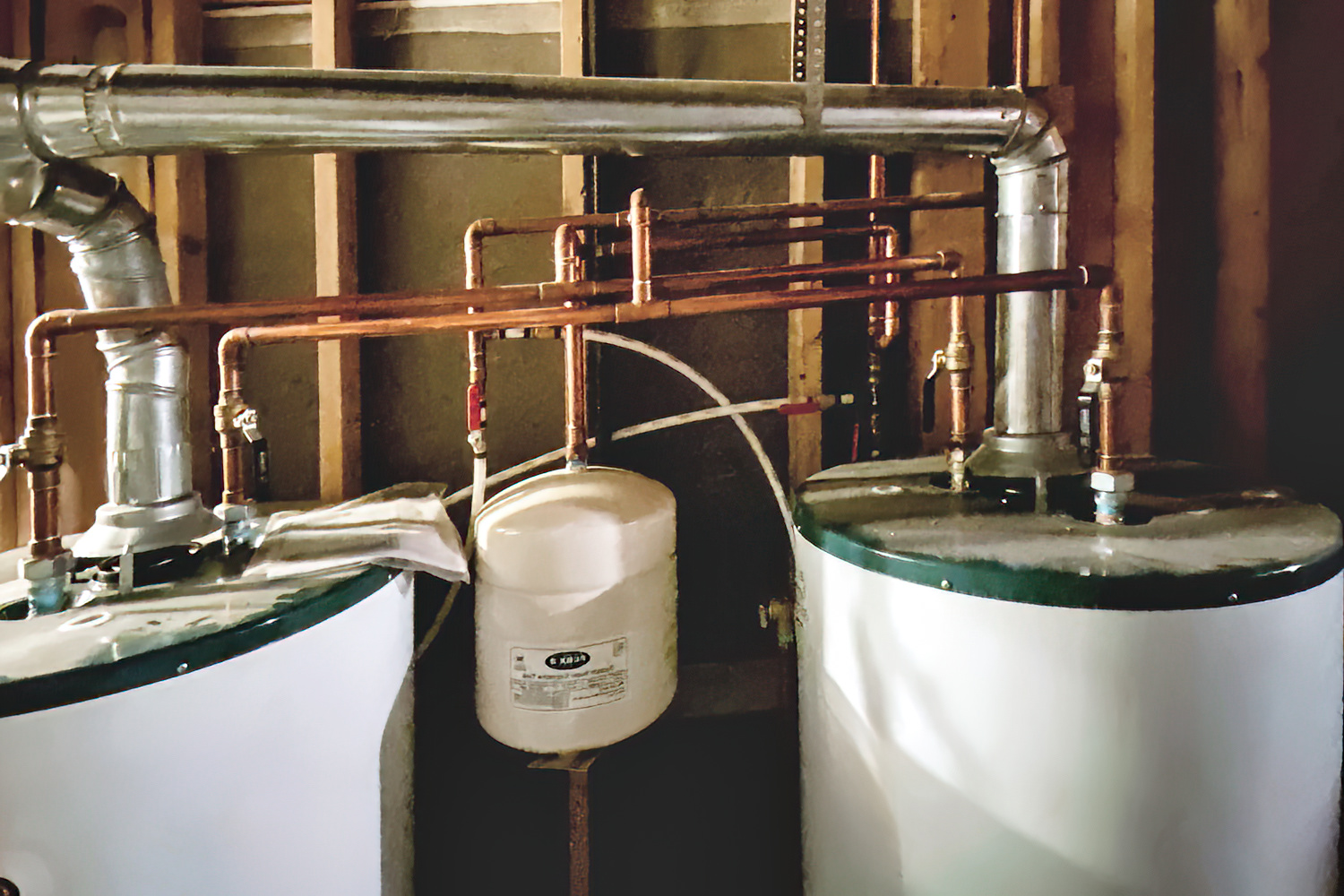
When installing one or more water heaters—whether in your home or a larger commercial application—two different types of piping systems can be utilized. The two types are called series piping systems and parallel piping systems.
Series Water Heater Piping Systems
When a plumber installs a series pipeline system, all of the pipes are connected directly to one another so that water flows in a continuous line. This type of piping system can be used when more than one water heater is needed, but it is generally used in single-family homes with one water heater and an average demand for hot water.
How Series Systems Work
In a series piping system, cold water enters water heater number one. The hot water outlet from water heater number one then either goes directly into the house or into the cold inlet of water heater number two. The hot water outlet of water heater number two then supplies your home.
For example, if homeowners need to raise the water temperature by 100 degrees, the system heats the water by 50 degrees in the first heater and another 50 degrees in the second. This uses more voltage to heat a smaller amount of water in stages.
Drawbacks of Series Systems
Over time, a system using multiple water heaters in series tends to wear out the first water heater about twice as fast as normally expected.
Parallel Water Heater Piping Systems
When a plumber installs a parallel piping system, it is always used when more than one water heater is installed in the same location. The beauty of a parallel piping system lies in its efficiency—it allows both water heaters to function simultaneously, acting together as one much larger water heater.
Benefits and Efficiency
A parallel system provides a greater volume of hot water while also extending the lifespan of both heaters, giving you peace of mind and confidence in your setup. For every amount of water discharged from one unit, the same amount is replaced instantly in the other.
Both heaters in a parallel circuit use the same amount of heat to function. This equal voltage is maintained due to the consistent length and size of the supply and delivery piping.
Technical Details
The supply and delivery piping are the same size to prevent cold inlet piping from overworking due to water pressure. In parallel, the system uses the same type and size of water heater; each heater has the same voltage but different current.
If you already have one water heater but find that your household uses more hot water than the unit can supply, it’s often smarter to add a second water heater in parallel rather than replacing your existing one with a larger model.
For example, if you need 80 gallons of hot water at once, installing two 40-gallon heaters is a better option than using a single 80-gallon tank. This approach is common in larger commercial applications.
Choosing Between Series and Parallel
In general, you can use either a series or parallel circuit when installing your water heater. However, a parallel configuration is usually more efficient and helps preserve your water heaters’ lifespan. Different water heater types can be used in series, and the same current controls both heaters.
With this information, you can determine which connection method works best for your needs and get the most out of your water heating system.
St. Paul Pipeworks — Your Local Plumber
If you are looking to have a new water heater installed in your home, or are simply searching for a reliable plumber in St. Paul or the Minneapolis metro area, give St. Paul Pipeworks Plumbing a call today.
Yours Truly,
Matthew Dettwiler
Social Media Manager
FAQs
How often should water heater piping systems be inspected?
It is recommended to have your water heater piping system inspected at least once a year. Regular inspections help ensure there are no leaks, corrosion, or blockages, which could lead to inefficiencies or damage. Consulting with a local plumber can help catch issues early and extend your system’s lifespan.
What materials are commonly used in water heater piping systems?
The most common materials used are copper, PEX (cross-linked polyethylene), and CPVC (chlorinated polyvinyl chloride). Each has specific advantages depending on your plumbing setup and local building codes. A local plumber can advise which material is best for your system.
Can I upgrade my water heater piping system to improve efficiency?
Yes. Upgrading can improve efficiency and reduce heat loss. For instance, insulating pipes or switching to more durable materials can enhance performance. Speak with a local plumber to assess your current setup and identify energy-saving upgrades.
What are the signs of a failing water heater piping system?
Common signs include reduced water pressure, unusual noises such as banging or hissing, water discoloration, or visible leaks. If you notice any of these, contact a plumber immediately for inspection and repair before problems escalate.
Is it necessary to replace piping when installing a new water heater?
Not always—it depends on your existing pipes’ condition and compatibility with the new heater. If pipes are old, corroded, or unsuitable, replacement may be recommended for optimal performance. A local plumber can evaluate and advise what’s best for your situation.