How Often Should I Have My Drains Professionally Cleaned?
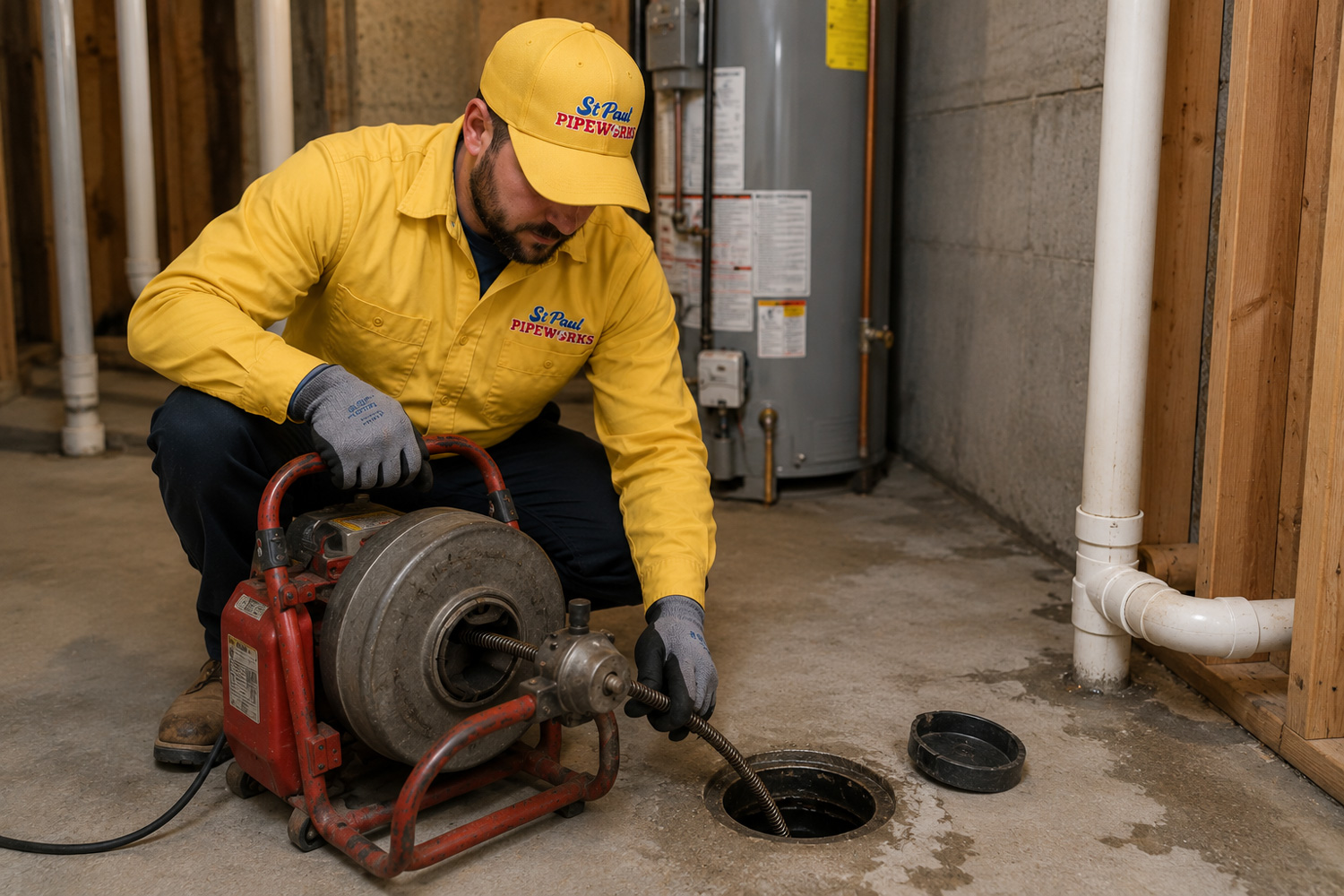
It is a good idea to have the main sewer line in your home cleaned regularly. This helps prevent expensive sewage backups, protect your home from health hazards, and extend the lifespan of your home’s plumbing system. Regular maintenance removes excess debris, grease, and underground tree roots before they can cause major damage to your plumbing pipes or even total blockages.
If you live in the St. Paul or Minneapolis area and you have slow drains, recurring clogs, or a sewer smell in your home, professional drain cleaning may be the solution. St Paul Pipeworks helps homeowners identify sewer problems early and keep their plumbing systems flowing the way they should.
What Is Sewer and Drain Cleaning?
Sewer and drain cleaning is the process of removing clogs and buildup from pipes and drainage systems to help prevent plumbing backups. Plumbers use tools such as drain snakes and high-pressure hydro jetting to keep your plumbing system working properly.
For homeowners, this service is one of the best ways to prevent bigger plumbing problems before they start. A clean drain line helps wastewater move out of your home efficiently and reduces the risk of messy, costly backups.
Signs of Sewer Problems
Foul Odors
Persistent foul odors coming from drains or sewage backups are signs of sewer problems. These odors often result from trapped debris, decomposing organic matter, or sewer gas leaks, and they usually require immediate attention to prevent further contamination.
Slow Draining Sinks and Toilets
Slow drainage in sinks, showers, or toilets is a common symptom of clogged pipes. It may indicate buildup, debris, or tree roots blocking water flow and should be cleaned or repaired before a backup occurs.
Water Backups and Flooding
Water backups in sinks, toilets, or floor drains are signs of major sewer line blockages or damage. They can lead to property damage, mold growth, and health hazards if not addressed quickly by a professional plumber.
Common Types of Sewer Issues
Clogged Drains
Clogged drains are the most common sewer issue. They happen when debris, grease, hair, and other materials collect inside pipes and block water flow. Clogged drains can lead to slow drainage, foul odors, and, if left unaddressed, complete blockages.
Corrosion and Pipe Damage
Over time, older sewer pipes can deteriorate due to corrosion or age-related wear. Corroded or damaged pipes may leak, crack, or even collapse, leading to sewage backups and costly property damage.
Tree Root Interference
Tree roots naturally search for moisture and nutrients, which can lead them into sewer lines through small cracks or joints. Root intrusion is especially common in older plumbing systems and yards with large trees or heavy landscaping.
Why Prevention Matters
Regular sewer and drain maintenance offers several important benefits:
- Improves drainage by restoring your pipes to full diameter and helping wastewater flow efficiently.
- Eliminates foul odors by clearing buildup that causes sewer smells and gurgling sounds.
- Protects health by reducing the risk of exposure to dangerous bacteria, parasites, and viruses in raw sewage.
- Prevents disastrous backups by stopping wastewater from flowing back into sinks, toilets, and floor drains.
- Avoids major repairs by catching blockages early before they lead to corrosion, cracks, or line collapse.
For many homeowners, drain cleaning is not just a response to a clog. It is a preventive service that helps protect the home, the plumbing system, and the people living in it.
Methods of Sewer and Drain Cleaning
Chemical Drain Cleaners
Chemical drain cleaners are common over-the-counter products designed to clear small clogs. However, they can be hard on pipes and harmful to the environment, so they are usually not the best option for long-term maintenance.
Snaking and Augering
Drain snakes and augers can break up and remove blockages from pipes. These methods work well for moderate clogs, but they often do not resolve deeper issues such as tree root intrusion or pipe damage.
Hydro Jetting
Hydro jetting is a high-pressure cleaning method that uses water to remove stubborn buildup and debris from sewer lines. It is highly effective for clearing grease, sludge, and mineral deposits and can help restore pipes to better working condition.
Benefits of Professional Sewer and Drain Cleaning
DIY drain cleaning methods may seem more affordable, but they can make the problem worse if the clog is deep or the pipe is damaged. A professional plumber has the right tools to identify the issue safely and prevent further damage and costly repairs.
Professional sewer and drain cleaning services offer several advantages, including expertise, specialized equipment, and better results. Plumbers can identify the cause of the issue, recommend the right solution, and properly clean the plumbing line without causing additional damage to pipes or fixtures.
At St Paul Pipeworks, we recommend having your main sewer line professionally cleaned or inspected every 18 to 24 months. If your property has a history of root intrusion or older pipes, you may need more frequent maintenance.
Need Sewer or Drain Cleaning in St. Paul or Minneapolis?
If you are interested in having your drains inspected, are dealing with clogged drains in your home, or are looking for a quality plumber in the St. Paul and Minneapolis metro area, give St Paul Pipeworks a call today.
Yours Truly,
Matthew Dettwiler
Social Media Manager
FAQs
How often should I have my drains cleaned professionally?
Most homes should have their main sewer line professionally cleaned or inspected every 18 to 24 months. Homes with older pipes or root intrusion may need service more often.
What are the signs that I need to have my sewer lines cleaned?
Common signs include foul odors, slow drains, recurring clogs, gurgling sounds, and water backups in sinks, toilets, or floor drains.
Is hydro jetting better than snaking?
Hydro jetting is often more effective for heavy buildup, grease, and sludge, while snaking is useful for smaller or more localized clogs. A plumber can recommend the best method based on the problem.
Can tree roots really damage sewer lines?
Yes. Tree roots can enter sewer lines through small cracks or joints and cause blockages, leaks, or pipe damage over time.
Should I use chemical drain cleaners?
Chemical drain cleaners may help with minor clogs, but they can damage pipes and are not ideal for long-term maintenance. Professional cleaning is a safer and more effective solution.